


BACK IN STOCK

BACK IN STOCK
Discover our Vanilla Matcha
Milia World

Our story
A family passion

our matcha
Japanese craftsmanship passed down from generation to generation

the benefits
A drink with multiple benefits.

the blog
Check out our news

Guide
Article published on 9 June 2026.
Have you ever noticed that two matcha teas can taste radically different—one mild and naturally sweet, the other bitter and grassy—even when they’re both Ceremonial grade and similarly priced? The region of origin plays a role, as does the cultivation method, but there’s one factor that most brands don’t mention: the cultivar.
A cultivar is the variety of tea plant (Camellia sinensis) from which your matcha leaves are sourced. And just as with grapes in viticulture, it largely determines what you’ll find in your cup: aromas, taste, texture, colour, and nutritional composition.
Here is why it is one of the most decisive factors in a quality matcha.

Freshly harvested leaves, before being processed into tencha
A cultivar is a plant variety that has been selected and propagated for its specific characteristics. In the world of Japanese tea, dozens of cultivars have been developed over the decades, each with its own agronomic and organoleptic properties.
In most cases, the selection of a cultivar involves striking a balance between several objectives:
This last point is crucial. Matcha is made from leaves that are grown in the shade for 3 to 5 weeks before harvest. This lack of light profoundly alters the chemistry of the leaf, and not all cultivars respond to this stress in the same way.
This is the most immediately noticeable effect. A cultivar rich in L-theanine—an amino acid that thrives particularly well in the shade—will produce a smooth, rich matcha. Conversely, a cultivar with low theanine content will yield a more bitter, tannic profile.
The mouthfeel—that smoothness or lingering finish—also depends in part on the cellular structure of the leaves, which varies by cultivar.
High-quality matcha has a bright, almost luminous green colour. This colour is directly related to the chlorophyll and amino acid content of the leaves. Some cultivars naturally produce leaves with a higher pigment concentration, resulting in a powder with an intense green colour. Other cultivars yield powders that are more yellow-green, indicating a different composition.
L-theanine promotes concentration and tempers the stimulating effect of caffeine: it is what gives matcha its gentle energy, without any spikes or crash. Catechins (particularly EGCG) are the antioxidants characteristic of green tea. Their respective levels vary significantly from one cultivar to another and directly influence the benefits you derive from your daily matcha.
Comparison of the main cultivars used for matcha production — profile, colour, theanine content, and usage notes
Theanine levels vary depending on shading conditions, harvest time, and terroir. The flavour profiles are indicative and may vary depending on how the tea is prepared.
This table illustrates just how important the choice of cultivar is. Behind packaging that simply says "Japanese matcha" could lie any one of these profiles or an unidentified mixture of several cultivars, known as a blend.
The answer is simple: transparency regarding the cultivar is restrictive. It requires working with identified growers, maintaining traceability on a batch-by-batch basis, and avoiding the use of cultivar blends that allow for the standardisation of large-scale production.
Matcha sourced from a single cultivar, a specific farm, and a specific harvest reflects a strong commitment to logistics and relationships. For you, it also serves as a guarantee of consistency and authenticity that standardised blends simply cannot offer.
Most entry-level and mid-range matcha teas are blends of multiple cultivars and origins, formulated to achieve a consistent flavour profile at a lower cost. This isn’t necessarily a flaw, but it’s a fact that labels almost always fail to mention.
At Milia Matcha, we have chosen to work exclusively with Okumidori, a rare cultivar that accounts for only a few percent of Japan’s total matcha production. It requires a longer shading period, a more delicate harvest, and specialized expertise, making it a highly prized variety in Japan.
Further Reading
How Matcha Is Made: Shading, Harvesting, and Grinding
Okumidori is a cultivar selected for its exceptional response to shading. When deprived of direct sunlight using traditional methods, it develops a particularly high concentration of L-theanine, which results in:
It is a challenging cultivar to grow; its sensitivity and low disease resistance make it less attractive to large-scale commercial operations. It is precisely for this reason that it remains the preserve of small-scale growers, who give it the care it deserves.

Knowing the cultivar of your matcha means understanding where what you’re drinking comes from. It’s the difference between buying a generic green powder and choosing a product whose origin you know.
If you drink matcha regularly, the cultivar determines:
Asking a brand for the cultivar is a good way to gauge its transparency. If the response is vague or non-existent, it often says a lot about the traceability of the rest of their products.
Frequently Asked Questions
A cultivar is a variety of tea plant (Camellia sinensis) selected for its specific characteristics: taste, yield, resistance, and composition. In Japan, dozens of cultivars are used for the production of green tea and matcha, each yielding a distinct flavour and nutritional profile.
There is no one-size-fits-all answer: it depends on the desired flavour profile. For a smooth matcha rich in umami, Okumidori and Gokou are among the most popular choices. For a delicate, floral profile, Samidori stands out. Yabukita, which is widely grown, is more versatile but rarely matches the quality of cultivars specifically bred for high-end matcha.
Okumidori responds very well to the shading technique used prior to the matcha harvest. This restriction of light stimulates the production of L-theanine in its leaves, resulting in a naturally mild matcha with little bitterness, a pronounced umami flavour, and a very intense green colour.
The vast majority of commercial matcha products are blends of multiple cultivars and origins, making it impossible or irrelevant to specify the cultivar. Brands that do specify their cultivar typically work with identified producers and maintain precise traceability, which is an indicator of transparency.
Yes, indirectly. Caffeine content varies depending on the cultivar, region, age of the leaves, and growing conditions. But it is primarily theanine—whose content varies significantly depending on the cultivar—that moderates the effects of caffeine, promoting a gentle, sustained energy boost rather than a spike followed by a crash.
Look for this information on the product page, the "Our Matcha" page, or the brand’s FAQ section. If the cultivar isn’t listed, don’t hesitate to ask directly. A reputable and transparent brand should be able to provide this information.
Ye, J.-H., Fang, Q.-T., Zeng, L., Liu, R.-Y., Lu, L., Dong, J.-J., Yin, J.-F., Liang, Y.-R., Xu, Y.-Q., & Liu, Z.-H. (2023). A comprehensive overview of matcha: production, food uses, potential health benefits, and the gastrointestinal fate of the major phenols. Critical Reviews in Food Science and Nutrition, 64(22), 7959–7980.
Fahad, S., & Alzahrani, A. (2023). Tea Cultivars in Japan. In A. S. Alzahrani (Ed.), Reference Module in Food Science. Springer.
Yamashita, H., Katai, H., Kawaguchi, L., Nagano, A. J., Nakamura, Y., Morita, A., & Ikka, T. (2019). Analyses of single nucleotide polymorphisms identified by ddRAD-seq reveal the genetic structure of tea germplasm and Japanese landraces for tea breeding. PLOS ONE, 14(8), e0220981.
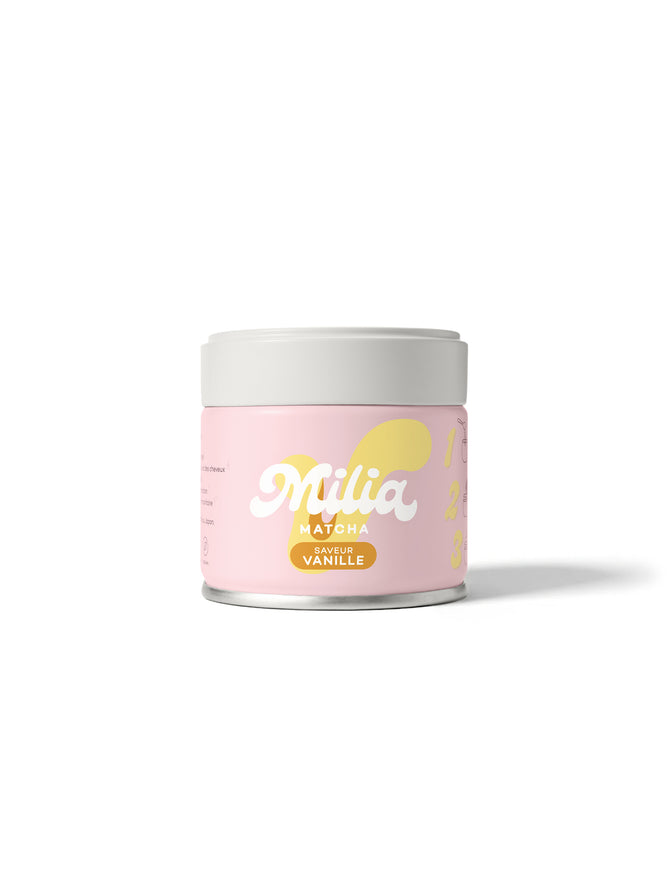
Ceremonial Matcha
Vanilla
30G


The Bamboo Whisk
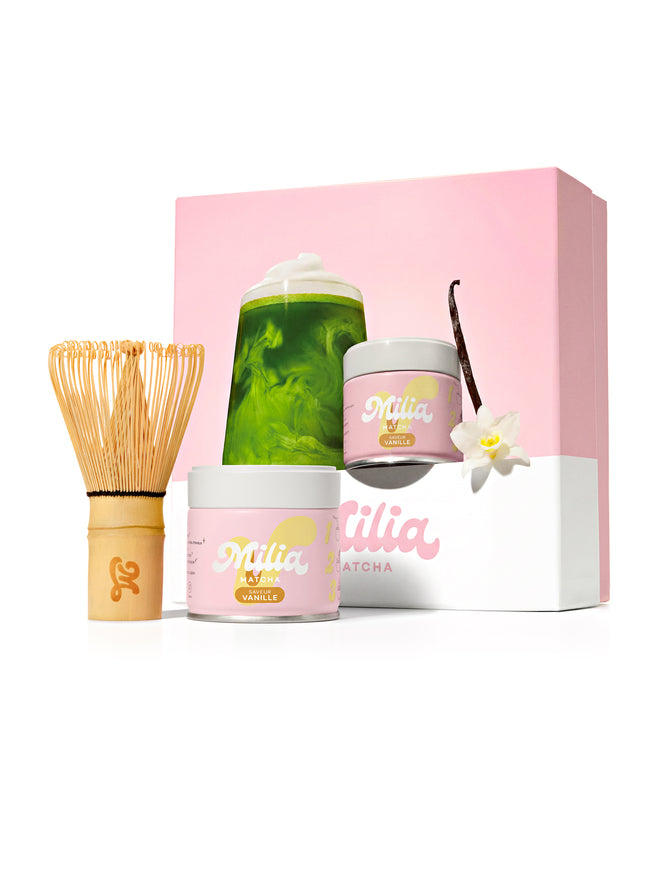
THE ESSENTIALS
Vanilla
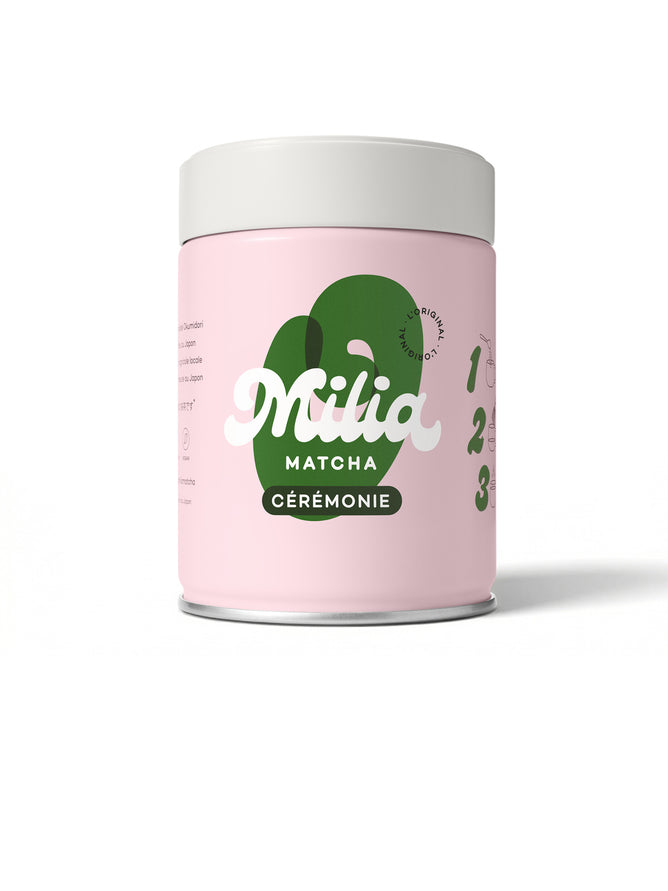
Ceremonial Matcha
Ceremonial
100G


