


BACK IN STOCK

BACK IN STOCK
Discover our Vanilla Matcha
Milia World

Our story
A family passion

our matcha
Japanese craftsmanship passed down from generation to generation

the benefits
A drink with multiple benefits.

the blog
Check out our news

Guide
Article published on 2 June 2026.
Matcha is an exceptional Japanese green tea, renowned for its rich aroma, intense green colour, and numerous health benefits. If you’d like to learn more about its origins, production, and properties, check out our comprehensive guide to matcha below. However, its delicate nature also makes it particularly sensitive to its environment: air, light, heat, and humidity.
Further Reading
A Comprehensive Guide to Matcha: Origin, Production, and Health Benefits

Our tins are designed to preserve your matcha
Proper storage of matcha is essential to preserve:
Learn how to store your matcha properly and avoid the most common mistakes.
Unlike teas that are brewed from leaves, matcha is an ultra-fine powder obtained by grinding green tea leaves. This texture significantly increases its surface area in contact with the air and exposes it more to external factors such as air, light, heat, and humidity. These factors naturally accelerate its oxidation and can affect its quality.

A delicate powder
Unlike a whole tea leaf, matcha powder has a much larger surface area exposed to air, light, and moisture, which naturally accelerates its oxidation if it is not properly protected.
Matcha that is not stored properly can quickly lose its vibrant green colour, become more bitter, lose its aroma, and eventually see its nutritional value decline. Proper storage of matcha therefore plays a key role in its taste.
The main mistakes to avoid are leaving matcha in a non-airtight package or a container that isn’t sealed properly, which allows air and moisture to enter and accelerates the oxidation of the matcha. You should also avoid exposing it to light or heat, as direct light and high temperatures degrade the tea’s natural pigments and aromas.
Another mistake would be to store it in the refrigerator without proper protection. This is because temperature changes in the refrigerator can cause condensation, and this moisture can damage the powder and cause the matcha to clump.
You should avoid frequent temperature fluctuations as much as possible. Temperature fluctuations make the product more fragile and accelerate its deterioration.
The key to proper storage lies first and foremost in the container. Matcha must be protected from air and light.
Our tins were specially designed with this in mind:
Metal—and stainless steel in particular—is widely used in Japan throughout the matcha production chain: the storage of leaves and powder, as well as handling and transportation. This material also ensures compliance with the strictest hygiene standards.
In fact, this material is rust-resistant, neutral, has no effect on the taste or properties of the tea, is durable, and provides protection. It ensures optimal preservation without altering the product.
Contrary to popular belief, high-quality matcha packaged in an airtight tin does not need to be stored in the refrigerator.
Our tins are designed to:
A dry environment with a stable room temperature is ideal.
Key Takeaways
Before opening: Store for up to 12 months in a dry place away from light; consume by the date indicated on the bottom of the tin.
After opening: We recommend consuming within 3 to 6 months.
For best results, we recommend consuming the matcha shortly after opening.
The quality of the packaging plays a key role. To preserve your matcha:
Our Japanese tins are designed to offer convenience, hygiene, and optimal freshness, right in your home.
There are several signs that may indicate a loss of freshness, such as a more yellow or dull colour, a less vegetal aroma, a more pronounced bitterness, or a coarser or clumpy texture.
These changes are generally caused by excessive exposure to air, light, or moisture.
Check it out
Find the matcha that's right for you
Frequently Asked Questions
No, not if your matcha is packaged in an airtight tin like our Milia Matcha tins. A dry cupboard with a stable temperature is sufficient.
Matcha that turns yellow or loses its lustre has often been exposed to air, light, or heat. This indicates oxidation and a loss of freshness.
No. The stainless steel used in our tins is neutral and has no effect on the taste or properties of the tea. In fact, this is the material used throughout the production process in Japan.
Ideally, within 3 to 6 months after opening to fully enjoy its flavours and benefits.
Be sure to always close the tin properly, use a dry spoon, and avoid sudden changes in temperature.
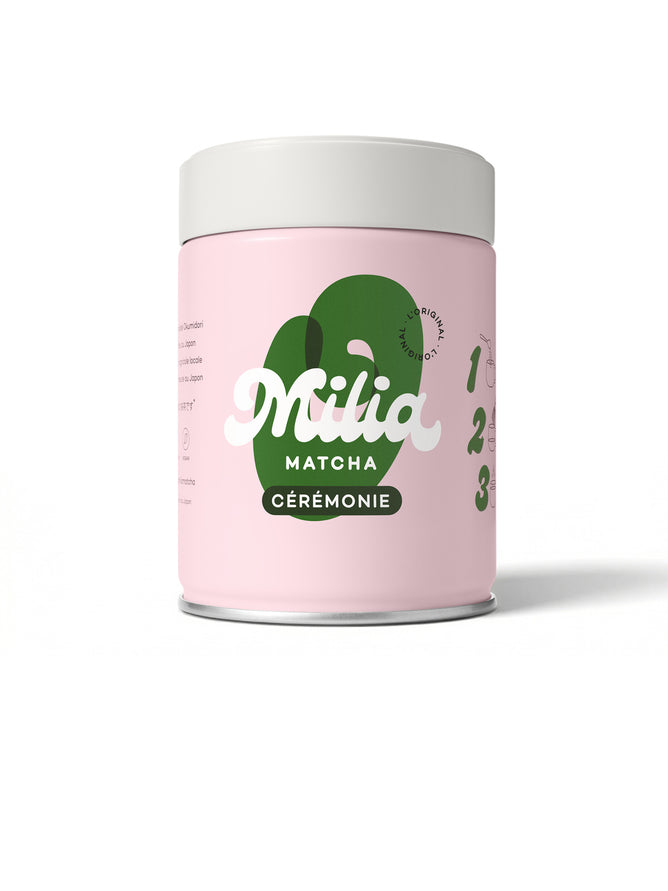
Ceremonial Matcha
Ceremonial
100G

1 glass
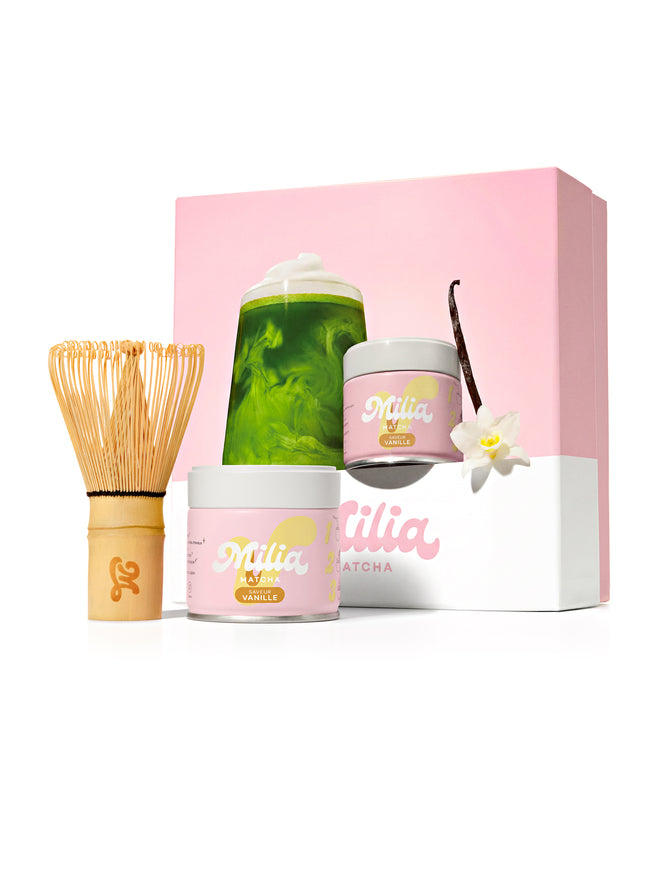
THE ESSENTIALS
Vanilla

Matcha To Go


