


BACK IN STOCK

BACK IN STOCK
Discover our Vanilla Matcha
Milia World

Our story
A family passion

our matcha
Japanese craftsmanship passed down from generation to generation

the benefits
A drink with multiple benefits.

the blog
Check out our news

Guide
Article published on September 25, 2026.
Like all teas, matcha contains aluminum: the tea plant naturally absorbs it from the soil, and no matcha has zero aluminum content. Que Choisir (formerly UFC-Que Choisir) measured 1,010 mg per kilogram in our Matcha Cérémonie, a level lower than the average for matcha samples analyzed in Europe. Based on actual consumption, a bowl prepared with 2 g of matcha provides about 2 mg of aluminum. This amount is comparable to that found in a chocolate bar, but only a tiny fraction of the aluminum ingested is absorbed by the body. For a healthy adult, one bowl per day is within the range of what the typical diet already provides. We are publishing the full analysis and explaining here what it means.
On September 24, 2026, Que Choisir (UFC-Que Choisir) published a test of seven matcha varieties, including our Ceremony Matcha, focusing on this metal. What matters is not the presence of aluminum, but its level, the exposure it represents when calculated per bowl, and what the science says about it.
Aluminum is neither an additive nor a treatment agent: it is a natural part of the environment. It accounts for about 8% of the Earth’s crust and is found in rocks, soil, water, and—through the roots—in plants.
The tea plant (Camellia sinensis) has a unique characteristic: it is what botanists call an “hyperaccumulator” of aluminum. Adapted to acidic soils, it absorbs aluminum and stores it in its cell walls, primarily in the epidermis of its leaves; this metal is even necessary for the growth of its roots. The aluminum content increases as the leaf ages: a few hundred milligrams per kilogram in young shoots, and several thousand in older leaves.
This is a characteristic of the tea plant, not a unique feature of matcha. First-harvest matcha, picked while the leaves are young, therefore naturally contains less of it than matcha made from older leaves.
Matcha has a unique characteristic: it isn’t brewed; instead, the whole leaf, ground into powder, is consumed. Everything found in the leaf ends up in the bowl—including aluminum, L-theanine, catechins, and chlorophyll. With brewed tea, some of the aluminum remains in the leaves that are discarded, but the brew also releases it: according to ANSES, hot beverages already account for 17% of French adults’ exposure to aluminum.
That's what makes laboratory analysis far more meaningful than a logo on the packaging: it measures what the finished product actually contains.
What determines aluminum exposure is not its concentration in a food, but the amount actually consumed, compared to what is already ingested from other sources.
Matcha is consumed in very small quantities—about 2 grams of powder per bowl. Based on the batch analyzed by Que Choisir(1,010 mg/kg), one bowl contains 2 mg of aluminum. A few comparisons can help put these figures into perspective.
Regarding the typical diet: According to the study on total dietary intake published by ANSES in January 2026, the average French adult consumes 2.7 mg of aluminum per day—even without drinking matcha—from bread, pastries, cereals, vegetables, and hot beverages. A bowl of matcha therefore accounts for about three-quarters of a typical day’s diet.
Regarding other foods: A 100-gram chocolate bar contains between 1.5 and 3 mg, depending on its cocoa content—the equivalent of one bowl; a baguette, about 1 mg; and 100 grams of shellfish or seafood, 2.1 mg.
Regarding health guidelines: Since 2008, the EFSA has set a tolerable weekly intake of 1 mg per kilogram of body weight, or 70 mg per week for a 70-kg adult. One bowl per day for one week accounts for 20% of that amount. In 2025, ANSES established a stricter limit of 40 µg per kilogram per day, or 2.8 mg per day for the same adult; this is the value adopted by Que Choisir. One bowl from the analyzed batch accounts for 72% of this value. This value is a long-term target, calculated using a safety factor of 79 relative to the no-observed-effect level in animals; ANSES’s own study shows that 39% of adults already exceed it through their regular diet alone.
Finally, ingestion is not the same as absorption: according to the EFSA, about 0.1% of the aluminum in food enters the bloodstream, and what is absorbed is excreted by the kidneys. Of the 2 mg in a bowl, the body retains about 2 µg.
Que Choisir purchased our Ceremonial Matcha on March 6, 2026 (batch 0-0004-100), had it analyzed by its laboratory, and then sent us the complete results. Here is what they show regarding aluminum, compared to measurements published elsewhere in Europe.
Independent analyses
Comparison of Measured Aluminum Concentrations and Reference Values
| Analysis | Result | Benchmark |
|---|---|---|
| Que Choisir, the association's laboratory (ICP-MS), lot 0-0004-100, purchased on March 6, 2026 | 1,010 mg/kg | Nine commercially available matcha samples analyzed by the German public laboratory CVUA Stuttgart in January 2026: ranging from 512 to 2,085 mg/kg, with an average of 1,112 mg/kg. Samples evaluated by the German Federal Institute for Risk Assessment (BfR) in 2019: ranging from 1,743 to 2,350 mg/kg. |
| Per 2-gram serving | 2 mg | 20% of the EFSA's tolerable daily intake (10 mg per day for a 70-kg person); the typical adult diet provides 2.7 mg per day (ANSES). |
| Aluminum absorbed by the bowl | ≈ 2 µg | About 0.1% of the aluminum in food enters the bloodstream (EFSA); the rest is excreted. |
Sources: Que Choisir (2026), CVUA Stuttgart (2026), BfR (2019), EFSA, ANSES.
There are no regulatory limits for aluminum in food, including tea: the reference values established by EFSA and ANSES are total exposure benchmarks, not product-specific standards.
We are publishing the Que Choisir analysis report exactly as the organization provided it to us, just as we publish our Eurofins analyses. You can view the full report here:
UFC-Que Choisir Analysis Milia Matcha
View the full analysis report
Ce document montre aussi tout ce que le laboratoire a cherché sans le trouver : résidus de pesticides (screening multi-résidus), glyphosate, chlorates et perchlorate, alcaloïdes pyrrolizidiniques, tous non quantifiables ; hydrocarbures aromatiques polycycliques à 1,3 µg/kg, pour un repère réglementaire de 50. Sur le mercure, le laboratoire de l'association obtient 0,044 mg/kg par ICP-MS, là où Eurofins, sur le même lot et par la méthode de référence pour cet élément (CV-AAS), n'en détecte pas (< 0,005 mg/kg) ; les deux rapports sont en ligne.
In our view, this is the only real answer when it comes to aluminum: measurable and accessible data, rather than a label on the packaging.
Before making a purchase, there are a few simple questions you can ask to evaluate a brand. See if it can clearly tell you:
Aluminum comes from the soil, and tea plants accumulate it more than most plants: it is found in all teas, including matcha. What sets a product apart, therefore, is not an impossible-to-achieve absence of aluminum, but the actual measured level, the exposure it represents when calculated per bowl, and the brand’s transparency regarding its test results. In our Ceremony Matcha, this level is measured, published, and falls below the average of what has been analyzed in Europe.
Frequently Asked Questions
Yes, just like all teas. The tea plant naturally accumulates aluminum from acidic soils in its leaves. No matcha has zero aluminum. What matters is the measured level, the age of the leaves, and the brand’s transparency.
In the batch analyzed by Que Choisir, there were approximately 2 mg per 2-gram bowl, of which the body absorbs about 0.1%. To put this in perspective, an adult’s typical diet provides 2.7 mg per day, and a serving of shellfish contains as much as a bowl.
For a healthy adult, one bowl (2 g) per day, added to the regular diet, remains less than half of the EFSA’s tolerable weekly intake. As with any concentrated food, moderation is advised beyond two bowls, primarily due to the caffeine content (approximately 70 mg per bowl). People with impaired kidney function are less able to eliminate aluminum and should consult their doctor; for young children and during pregnancy, German authorities recommend limiting consumption as a precaution.
Based on the available data, EFSA does not consider that dietary exposure to aluminum poses a risk of developing Alzheimer’s disease. Aluminum is neurotoxic at high chronic doses, such as those observed in dialysis patients or workers exposed through inhalation over many years—situations that have nothing to do with a cup of tea.
Que Choisir, “Matcha: Aluminum Alert, ” September 24, 2026, and the test protocol
Que Choisir Ensemble, “Analysis Results—2026 Green Tea Study,” MAT7 data sheet (Milia Matcha , Lot 0-0004-100), and “Analysis Methods”
Eurofins Dr. Specht International, reports AR-347-2026-00020959-01 and AR-347-2026-00025261-01 (batch 0-0004-100, April 2026)
ANSES, French Total Diet Study 3 (EAT3), Results – Volume 1, January 2026
ANSES, Health Reference Values for Aluminum, Archives of Occupational and Environmental Diseases, 2026
EFSA, “Safety of Aluminum from Dietary Intake, ” 2008
BfR, Opinion 027/2019 on aluminum in matcha, 2019
CVUA Stuttgart, “Matcha: Pure Green Delight or Hidden Risks?”, January 2026
Klotz, K., et al., “The Health Effects of Aluminum Exposure, ” Deutsches Ärzteblatt International, 2017
Carr H.P. et al., “Accumulation and Distribution of Aluminum in Tea Leaves, ” Agronomie, 2003; “Aluminum Is Essential for Root Growth of Tea Plants, ” 2020

THE ESSENTIALS
Ceremonial
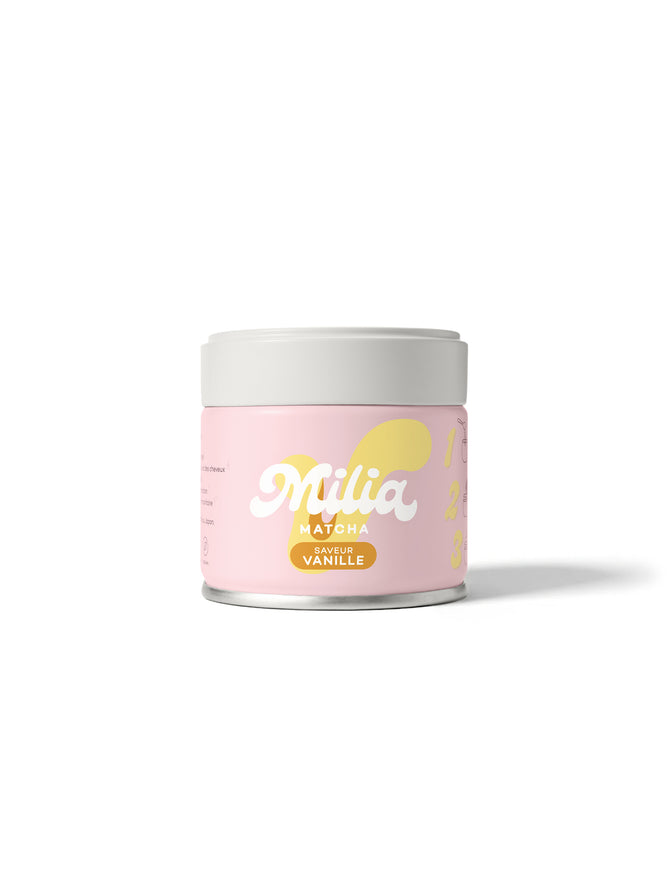
Ceremonial Matcha
Vanilla
30G
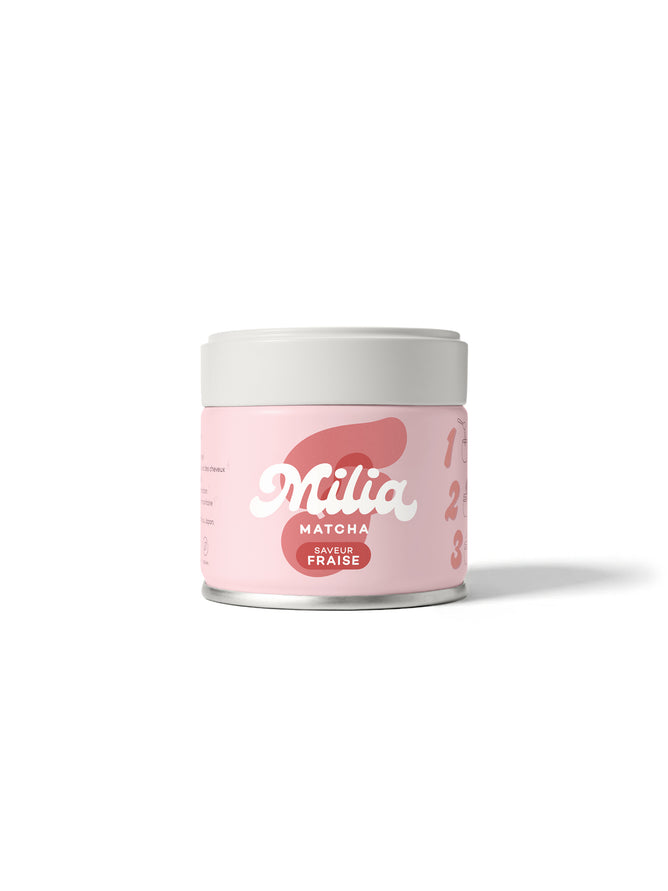
Ceremonial Matcha
Strawberry
30G
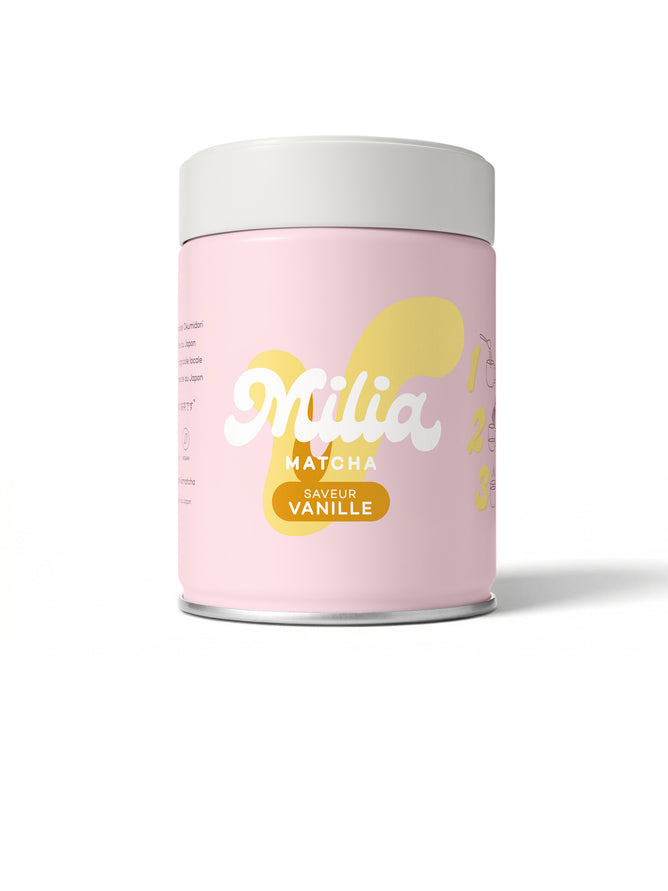
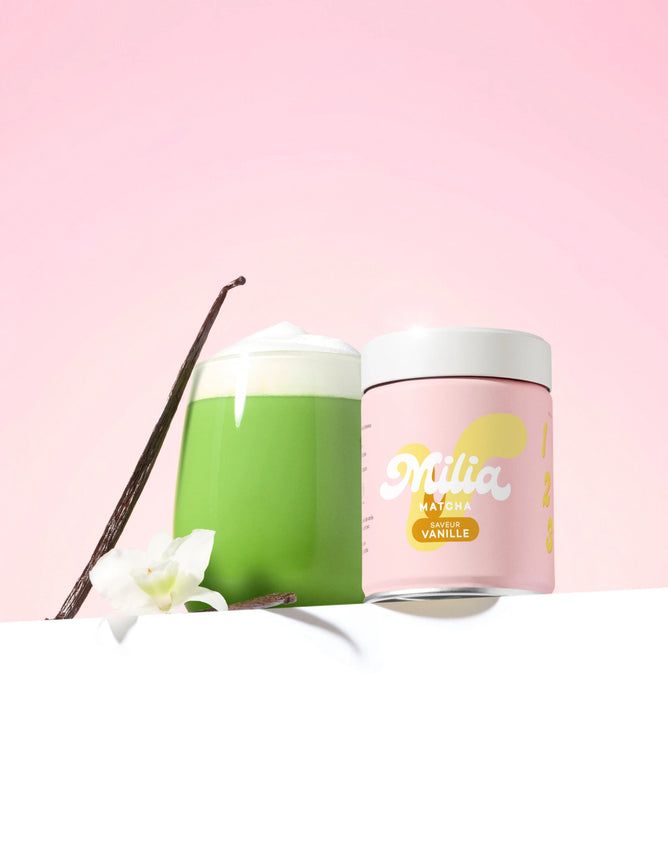
Ceremonial Matcha
Vanilla
100G


