


BACK IN STOCK

BACK IN STOCK
Discover our Vanilla Matcha
Milia World

Our story
A family passion

our matcha
Japanese craftsmanship passed down from generation to generation

the benefits
A drink with multiple benefits.

the blog
Check out our news

Guide
A tea-growing region with a history dating back a thousand years, and Japan's third-largest tea producer.
Mie Prefecture, on Japan’s Pacific coast, is the country’s third-largest tea-producing region and the leading producer of kabusecha-style shaded teas. It is there, on a family-run farm in the northern part of the prefecture, that the Okumidori used in all of our matcha is grown.
Mie stretches along the Pacific coast of Honshū Island, between Nagoya and Osaka, on the eastern edge of the Kansai region. It is a land of hills, rivers, and rice paddies nestled against the Suzuka Mountains, with a coastline indented by bays and peninsulas to the south. In Japan, everyone knows Mie for three things: the Grand Shrine of Ise, Matsusaka beef, and the sea, with its pearls and pearl divers. Few people know that it has also been a land of tea for over a thousand years.
The Ise Shrine (Ise Jingū) is the holiest site in Shintoism, dedicated to Amaterasu, the sun goddess from whom the imperial family claims descent. For over 1,300 years, its wooden structures have been dismantled and rebuilt identically every twenty years, following the same rituals: it is the same shrine, and it is always new. A Japanese proverb states that everyone should visit it at least once in their lifetime, and the Ise pilgrimage has been, since the Edo period, the country’s most popular long-distance journey[1].
Our matcha fields are located less than an hour’s drive from this shrine. This is no small detail: for centuries, the Ise region has been a hub of travel and trade where the local tea, Ise-cha, became well-known to pilgrims from all over Japan.
Tea cultivation in Mie is one of the oldest in Japan. Prefectural records trace its origins to the Engi era, around the year 900, at Jōrin-ji Temple in what is now the city of Yokkaichi, where a monk was already growing tea and had introduced it to the local residents[2]. In the early Kamakura period, the monk Myōe is said to have planted seeds in Ise-Kawakami that he had received from the Zen master Eisai—the very same man who had brought tea back from China in 1191[3].
In the early Meiji era, Mie had more than 4,000 hectares of tea plantations—more than Shizuoka—peaking at 4,419 hectares in 1892, the year the first official statistics were compiled[2]. Mie is also the birthplace of Ōtani Kahei (1845–1933), a native of Matsusaka, who founded the National Tea Industry Organization and was nicknamed “the tea saint” for his work on quality[3].
For a long time, however, tea from Mie Prefecture was sold in bulk to be blended with tea from better-known regions. To restore its identity, the prefecture’s cooperatives registered the collective trademark “Ise-cha” (Ise tea) in April 2007, which today refers to all green teas produced in the prefecture[4].
Mie enjoys a temperate, humid climate, well-drained soil, and a terrain that protects the plots. Production is split between two regions[3][5]:
With approximately 5,000 metric tons of raw tea produced annually on some 2,600 hectares, Mie ranks third in Japan, behind Shizuoka and Kagoshima. For kabusecha, it ranks first, accounting for nearly 60% of the national volume[2][6]. This shade-growing technique, which has been established for decades, is a clear advantage for matcha, which relies on the same principle taken to the next level.
It is in this region, in the northern part of the prefecture near Yokkaichi—where it all began eleven centuries ago—that we work with an independent grower, the heir to a family-owned plantation that has been passed down for over 60 years. On a farm spanning more than 20 hectares, he cultivates the Okumidori variety—the source of our matcha—which is shaded for three to four weeks before the year’s first harvest.
Further Reading
Matcha cultivars
Mie, in fact, has a direct connection to the history of this cultivar: the prefecture was one of the trial sites selected as early as the 1970s by the National Tea Research Institute, and began planting it in 1999, alongside Kyoto, to spread out the harvest period[7]. Yabukita, however, remains the dominant variety in the region, accounting for more than 80% of the total area; Okumidori remains a choice for discerning producers there.
You can't talk about Mie without mentioning its ama, literally “women of the sea.” For over 1,300 years, along the coasts of Toba and Shima, women have been free-diving—without tanks—to gather abalones, turbot, sea urchins, and seaweed. Archival records mention abalones shipped from here to the capital as early as 745, and shells found at prehistoric sites along the coast suggest that the practice dates back even further[8].
Toba and Shima are now home to about half of Japan’s ama, and this women’s tradition—passed down from mother to daughter—was the first in the country to be designated as an intangible cultural heritage of the prefecture in 2014, before being added to Japan’s National Intangible Cultural Heritage list in 2019[8][9]. It was also to these women that Kōkichi Mikimoto, a native of Toba, turned when he invented the cultured pearl in 1893: it was the ama who dived to plant and harvest the pearl oysters.
These women reveal something about Mie: a relationship with nature characterized by patience, precise movements, and respect for the seasons. It is the same spirit found in the tea fields, a few dozen kilometers away.
Uji, in Kyoto Prefecture, is the most famous region for Japanese matcha: it is there that shade-grown tea cultivation and the tea ceremony developed, and the name “Uji” is almost a guarantee of quality in and of itself.
What few people know is what the term actually encompasses. The official definition of “Uji tea,” established by the Kyoto Prefecture Tea Industry Council, permits leaves grown in four prefectures: Kyoto, Nara, Shiga, and Mie, provided that the tea is processed and packaged in Kyoto by a Kyoto-based company. There is no minimum proportion of Kyoto leaves : a 50% requirement had been considered in 2003 but was abandoned due to a lack of sufficient quantities of Kyoto leaves; the adopted text simply states that Kyoto is “given priority”[10]. And for good reason: Kyoto produces about 2,600 metric tons of tea per year, while Mie produces twice that amount[6].
In other words, a significant portion of what is sold under the name “Uji” is grown elsewhere, and Mie—with its deep-green, shade-grown teas—is one of the regions that contributes to the Uji designation. Mie may not be as well-known as Uji, but it produces leaves that Uji is happy to use.
One important detail to note about matcha in particular: contrary to popular belief, Kyoto is no longer the leading producer of tencha, the leaf used to make matcha. Since 2020, Kagoshima has led in terms of volume, accounting for 38% of national production in 2023, compared to 23% for Kyoto[6]. At Milia Matcha, there’s no question about it: our matcha is 100% from Mie Prefecture, 100% Okumidori, sourced from a single farm.
Kagoshima, in the very south of Japan on the island of Kyūshū, became the country’s leading tea-producing prefecture in 2024, as well as the leading producer of tencha[6]. Its model is large-scale: vast plots of flat land, highly mechanized harvesting and shading, and production organized for volume and export, approaching industrial-scale operations. This is what enables it to supply a significant portion of the matcha sold worldwide.
Mie is at the other end of the spectrum: production there is more fragmented, driven by medium-sized family farms on hillsides where the plots are still largely worked by hand. That is the model we have chosen, working with the family that has been growing our Okumidori for over 60 years.
At Milia Matcha, all of our matcha comes from the same family of growers, who have been based near Yokkaichi for over 60 years. This direct and ongoing connection to a single region ensures complete traceability—from the field to the can—and consistent flavor from one harvest to the next.
In summary
Mie may not be as well-known as Uji, but it is a tea-growing region with a history stretching back a thousand years—the third-largest in Japan, the leading producer of shaded teas, and one of the lesser-known regions behind the Uji designation itself. It is also home to the Ise Shrine and the ama divers. It is the region we have chosen since our inception, and the one we will continue to champion.
Frequently Asked Questions
Yes, matcha contains caffeine, but it is released gradually thanks to the L-theanine it naturally contains. Unlike coffee, the energy boost it provides is more consistent over time, without any sudden spikes or crashes.
Exactly—that's actually the key to making a matcha latte. Just whisk the matcha into a little hot water (about 70°C) before adding the milk to prevent lumps from forming.
Ceremonial matcha comes from the first harvests and is enjoyed plain, mixed with water. Culinary matcha, which has a stronger flavor, is intended for use in dishes such as lattes, pastries, or smoothies, where it blends well with other ingredients.
No. The quality of matcha depends on the cultivar, shading, harvest, and the producer’s expertise—not on the region’s reputation. In fact, the “Uji tea” designation allows for leaves grown in Mie: some of the tea sold under the name “Uji” comes from regions like ours.
We have been working with the same family of producers near Yokkaichi for over 60 years, which ensures complete traceability and consistent flavor. We chose this farm for the quality of its Okumidori chicken, rather than for the region’s reputation.
For over a thousand years: Records trace its history back to the year 900 at the Jōrin-ji Temple in Yokkaichi. In the early Kamakura period, the monk Myōe is said to have planted seeds there that he had received from Eisai, who had brought tea back from China in 1191.
This is the collective name for green teas produced in Mie Prefecture, registered as a regional trademark in 2007. It includes kabusecha from the north, sencha and fukamushi sencha from the south, and tencha used to make matcha.
The Ise Grand Shrine and its Okage-yokochō shopping street, the ama divers of Toba and Shima, and the tea-covered hills of Yokkaichi and Suzuka—all less than an hour apart.
[1] Ise Jingū, the shrine’s official website, and the Japan National Tourism Organization: The Ise Pilgrimage (O-Ise-mairi) and the 20-year reconstruction (shikinen sengū). https://www.isejingu.or.jp/en/
[2] Mie Prefectural Government, Agriculture Bureau. Tea in Mie Prefecture: History, Cultivated Area, and Production. https://www.pref.mie.lg.jp/NOUSAN/HP/77019045892.htm
[3] MAFF, Japanese Ministry of Agriculture, Forestry, and Fisheries. Ise-cha, Nippon Dentō Shoku Zukan(Encyclopedia of Traditional Foods). https://www.maff.go.jp/j/keikaku/syokubunka/traditional-foods/menu/ise_tya.html
[4] Japan Patent Office (JPO), regional collective trademarks. “Ise-cha,” registered on April 13, 2007.
[5] JA Zennoh Mie. Types of Ise-cha (and their production areas). https://www.zennoh.or.jp/me/product/tea/type/
[6] MAFF (2024). The State of the Tea Industry: Production by Prefecture and Tea Type, 2023 Data. https://www.maff.go.jp/j/seisan/tokusan/cha/
[7] Yagi, C., Ikeda, N., & Sato, D. (2010). Characteristics of eight Japanese tea cultivars. Fruits and Nuts, F_N-15. University of Hawaiʻi at Mānoa, CTAHR.
[8] Mie Prefecture, Cultural Heritage. 海女習俗 (the customs of the ama of Toba and Shima). https://www.pref.mie.lg.jp/common/04/000063473.htm
[9] Japan Agency for Cultural Affairs, Japanese Heritage. Toba and Shima: Towns Where You Can Meet Ama Divers (2019). https://japan-heritage.bunka.go.jp/ja/stories/story073/
[10] Kyoto Prefecture Tea Industry Council (京都府茶業会議所). Official Definition of Uji Tea (2004) and “Uji-cha Q&A.” https://ujicha.or.jp/knowledge/qa/
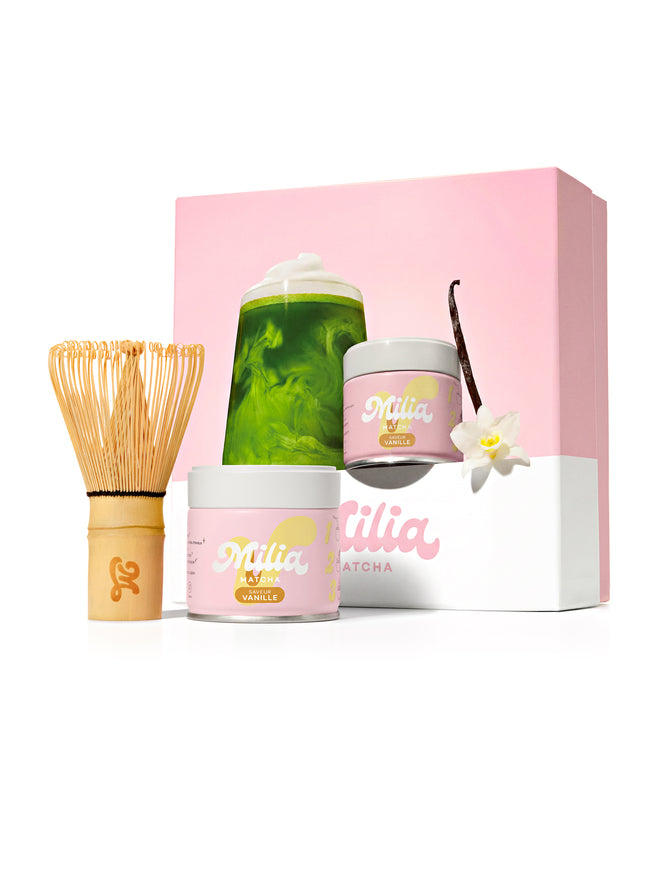
THE ESSENTIALS
Vanilla

THE ESSENTIALS
Ceremonial
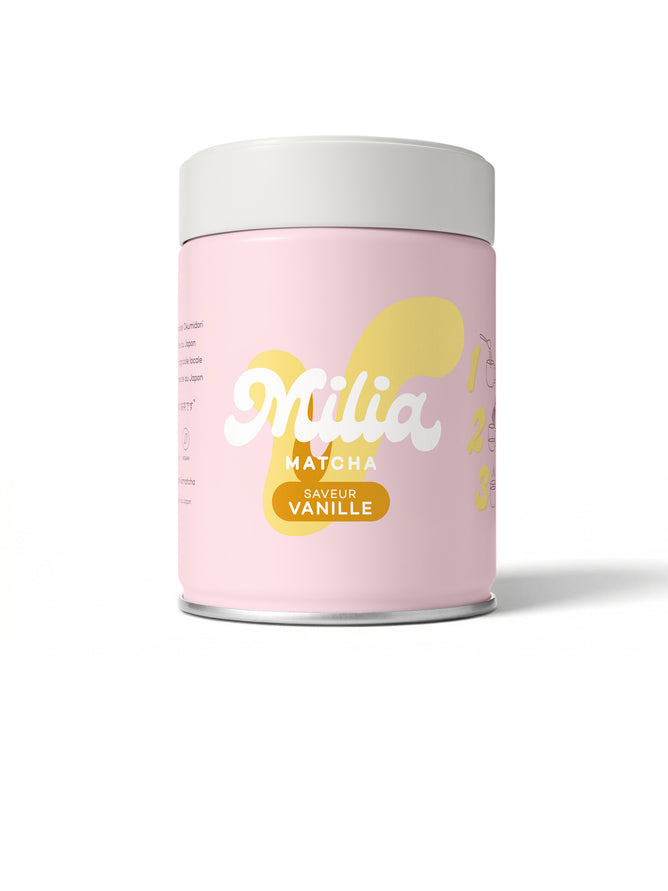
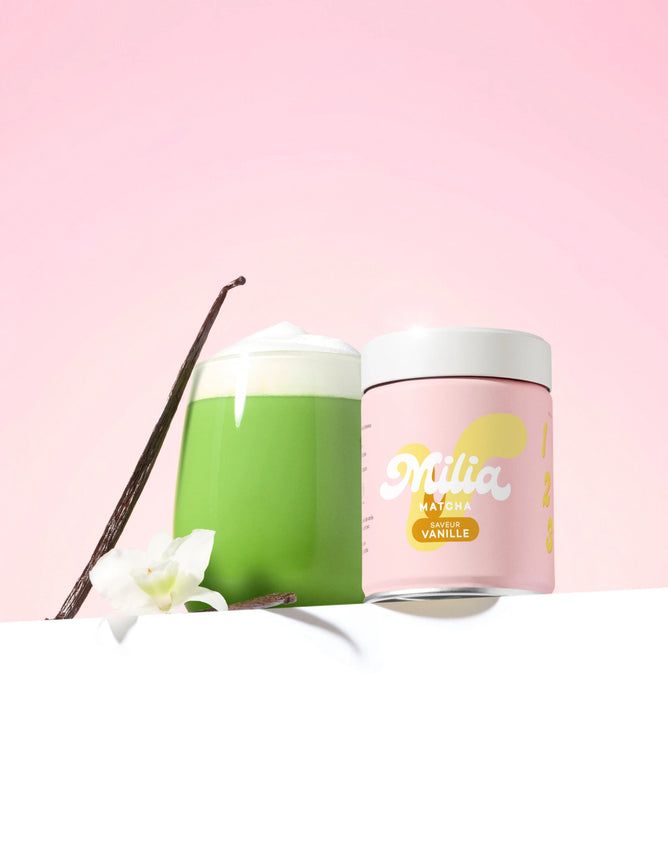
Ceremonial Matcha
Vanilla
100G
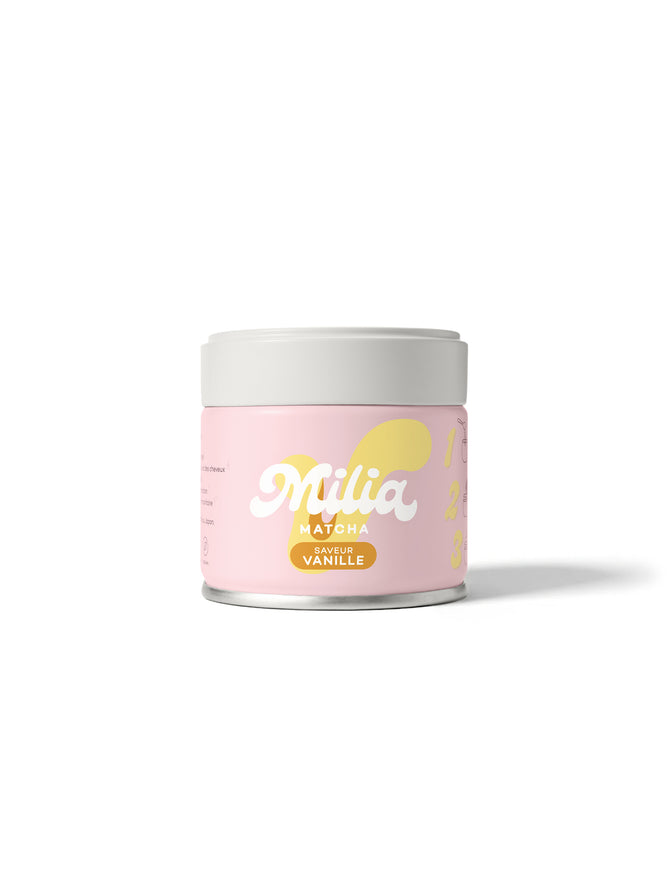
Ceremonial Matcha
Vanilla
30G


