


BACK IN STOCK

BACK IN STOCK
Discover our Banana Matcha
Milia World

Our story
A family passion

our matcha
Japanese craftsmanship passed down from generation to generation

the benefits
A drink with multiple benefits.

the blog
Check out our news

Guide
Article published on 15 April 2026.
Between coffee—with its comforting aroma, its almost sacred ritual, and the instant “energy boost”—and matcha, the star drink of coffee shops and Instagram feeds, the matcha vs. coffee debate has never been more heated. Among consumers, we’re seeing a real shift: fewer daily energy drinks and more people seeking alternatives to coffee that offer steady energy and a sense of well-being without the crash that comes with coffee.
But matcha still suffers from its image as an “Instagram-trendy drink,” rather than being recognised for what it really is: a beverage with a unique composition that deserves serious consideration. Here, we compare the key factors (caffeine, focus, health, side effects, taste) to help you make a hassle-free choice.
Matcha is a Japanese green tea powder made from the Camellia sinensis plant, but its production process sets it apart from ordinary tea. A few weeks before harvest, the tea plants are shaded, a process that profoundly transforms the leaves: deprived of direct light, they accumulate L-theanine, a soothing amino acid, and chlorophyll, which is responsible for their intense green colour. The leaves are then dried, stripped of their stems and veins, and ground into an extremely fine powder.
What makes matcha truly unique is what you’re consuming: not an infusion, but the whole leaf ground into powder and dissolved directly in water. As a result, its nutritional profile is much richer than that of a traditional tea.
Further Reading
What Is Matcha? Origin, Health Benefits, How to Choose and Prepare Matcha
Coffee begins with a seed—the seed of the coffee plant—which is roasted to bring out its aromas. Two varieties dominate the market: Arabica, which is milder and fruitier, and Robusta, which is bolder and higher in caffeine. But roasting is only part of the process. The brewing method (filter, espresso, cold brew, percolator) radically transforms the result in the cup: acidity, texture, bitterness, and the amount of caffeine absorbed can vary by as much as twofold depending on the method chosen.
It’s also a drink deeply ingrained in our daily lives: morning coffee, a break at the office, the familiar scent that signals waking up. Its ability to provide a quick energy boost is undeniable, which is why it remains hard to replace.
Caffeine content varies depending on the brand, recipe, and cup size, but here are some useful guidelines:
Sources · EFSA NDA Panel (2015). EFSA Journal, 13(5), 4102 · EUFIC (2023) · ANSES (2013), report on energy drinks · Kochman J. et al. (2021). Molecules, 26(1), 85 · EU Portion Sizes: Continental Format (coffee 200 ml, espresso 60 ml)
It’s important to remember that matcha isn’t “caffeine-free.” Its caffeine content is often lower than that of coffee, but it’s still enough to give you a boost. According to the study “Health Benefits and Chemical Composition of Matcha Green Tea: A Review,” published in Molecules by Kochman and his team in 2020, matcha contains between 18.9 and 44.4 mg/g of caffeine, which is higher than most other green teas (11.3–24.67 mg/g). Coffee beans, on the other hand, contain 10–12 mg of caffeine per gram of beans.
This is where the two drinks differ, beyond their caffeine content.
Coffee: The effect is often perceived as immediate and intense—the famous “energy boost.” In fact, according to Nehlig and colleagues (“Physiological Effects of Coffee and Human Health: A Review,” 2012), caffeine works by blocking adenosine, a neurotransmitter that promotes drowsiness, thereby maintaining alertness and improving concentration. However, for some people, it can cause nervousness or an upset stomach, sometimes followed by a crash if they’re sensitive, haven’t eaten much, or drink several cups of coffee in a row.
Matcha: The vast majority of people describe a gentler, more sustained energy boost over time, without any sudden spikes or significant energy crashes. The main reason for this is that matcha contains L-theanine, an amino acid naturally found in green tea.
L-theanine is an amino acid known for its effects on relaxation and attention, particularly through the activation of alpha brain waves. Results vary depending on dosage and individual profiles, but the combination of caffeine and L-theanine is often highlighted for promoting a state of calm alertness: alert without restlessness.
According to the study "Health Benefits and Chemical Composition of Matcha Green Tea: A Review" (Molecules, 2021), theanine contributes to matcha's umami flavor—which is not bitter—and, when combined with caffeine, improves concentration and alertness and reduces stress. Matcha infusions contain between 6.1 mg/L and 44.65 mg/g of theanine, depending on the analysis.
In summary
L-theanine is an amino acid naturally found in green tea that, when combined with caffeine, promotes a state of calm alertness and a "focus mode" with less nervousness and restlessness.
Matcha is one of the most concentrated sources of antioxidants in the typical diet. Its catechins, particularly EGCG, are being studied for their anti-inflammatory effects. Since the whole leaf is consumed rather than just an infusion that is discarded, Kochman and colleagues (Molecules, 2020) point out that this method of consumption provides higher concentrations of catechins, caffeine, chlorophyll, and L-theanine than a traditional green tea infusion.
Beyond its stimulating effect, coffee is a rich source of antioxidants. According to a review published in Molecules in 2014 by researchers at the University of British Columbia, its chlorogenic acids and caffeine have documented antioxidant activity that may help reduce the effects of cellular ageing and inflammation (Liang & Kitts, 2014).
Coffee and matcha contain caffeine, and matcha also provides catechins: these compounds are often associated with a slight increase in energy expenditure in some people. In real life, the effect is generally modest and depends mainly on the context (sleep, diet, activity level, and the amount of sugar in the drink).
The bottom line: If your matcha becomes a very sweet drink, the metabolic benefit disappears. If your drink remains simple, it can be incorporated into a weight-management routine—without any promises of miracles.
Our advice
If you have a sensitive stomach, start by trying matcha after a meal, using a moderate amount (1 to 1.5 g). Then adjust the amount based on how you feel.
Matcha has a structural advantage: since you drink the whole leaf, it is a beverage that is naturally very rich in antioxidants. As a result, the catechins help reduce oxidative stress, which is often associated with skin ageing.
In everyday life, many people also appreciate it for its “cleaner skin” benefits: sebum regulation, clearer skin, and less visible blemishes. And with chlorophyll, people often talk about a “radiant glow” effect, resulting in a fresher, more luminous complexion.
The same principle applies to hair. Thanks to its antioxidants and amino acids, matcha is often cited as helping to strengthen the hair shaft and add shine, especially when stress is a factor.
These effects don't make matcha a cosmetic product, but they are part of the overall experience that many regular consumers describe.
Further Reading
Discover the Benefits of Matcha
The combination of caffeine and L-theanine is exactly what people who engage in long periods of focused work are looking for. It keeps you alert and focused without making you feel jittery or restless. This is what English speakers call "calm focus," and it’s hard to achieve with coffee alone.
Whether you need to wake up refreshed on a Monday at 7 a.m., attend a 9 a.m. meeting after a short night’s sleep, or power through a last-minute push before a deadline, coffee remains the most effective tool because it’s fast, potent, and reliable. Beyond its stimulating effect, coffee contributes to a sense of satisfaction and pleasure. Moderate consumption can reduce stress and uncertainty, promote a good mood, and optimise energy levels throughout the day.
The effects of coffee depend on the amount consumed. According to a landmark review published in Pharmacological Reviews, one of the most cited journals in pharmacology worldwide, when caffeine intake exceeds 600 mg per day, the positive effects are reversed: nervousness, anxiety, and irritability increase significantly (Fredholm et al., 1999).
In fact, its side effects are well known: nervousness, palpitations, difficulty falling asleep, and a tolerance that builds up over time, which means doses must be increased to achieve the same effect.
The common thread is simple: whether it's coffee or matcha, it's still caffeine. The difference lies mainly in how your body experiences it.
A simple guideline
The EFSA recommends up to 400 mg/day for healthy adults, and 200 mg/day during pregnancy or breastfeeding.
Let's be honest: bad matcha can be bitter, harsh, and aggressively "green." And that's often where it all ends: one bad experience, and the verdict is final. And that's exactly why so many people say, "I tried it once, never again." But it's not the matcha itself—it's a matter of quality and preparation.
The most common reasons for a bad experience:
You didn't hate matcha—you hated that particular matcha, prepared that way.
Choose matcha if…
Choose coffee if…
Why not both? The Dirty Matcha
A "dirty matcha" is matcha plus a shot of espresso. For some, it's the best of both worlds. Proceed with caution if you're sensitive to it, but it's a fun option when you want a boost without giving up your matcha ritual.
Sources: Kochman et al. (2021), Toniolo et al. (2025), White et al. (2025)
Matcha vs. coffee isn't a battle between good and evil. It's a choice between two philosophies of energy: one fast and powerful, the other gradual and long-lasting. The right choice depends on you, your tolerance, your pace, and what you expect from your daily beverage.
And if you’ve been disappointed by matcha once, don’t jump to conclusions. A high-quality matcha, prepared properly, is a completely different experience. Smooth, vegetal, with no bitterness—a drink you look forward to in the morning, not one you drink out of principle.
Frequently Asked Questions
None—it's the same molecule. What changes is the effect you feel: matcha is often more "stable" thanks to L-theanine.
Generally speaking, no. Expect 30–70 mg per 1 to 2 g of matcha (150 ml), compared to an average of 115 mg in a 150 ml cup of filter coffee—with significant variations depending on how it’s prepared.
Yes. Start by replacing one cup a day: you'll maintain your energy levels, often with less jitteriness and fewer "crashes."
If you tolerate it well, either one is fine. Matcha often has the edge if you're sensitive (to stress, sleep, or stomach issues) and if you want more antioxidants.
It can help support metabolism, but the effect is still moderate. The real key is the big picture: sleep, diet, physical activity… and avoiding sugary drinks.
Yes, as long as your caffeine intake remains moderate. It's best to avoid drinking it too late in the day, especially if you're a light sleeper.
Sources:
Kochman, J., Jakubczyk, K., Antoniewicz, J., Mruk, H., & Janda, K. (2021). Health benefits and chemical composition of matcha green tea: A review. Molecules, 26(1), 85. https://doi.org/10.3390/molecules26010085
Nehlig, A. (2012). Physiological Effects of Coffee and Human Health: A Review. Cahiers Agricultures, 21(2–3), 197–207. https://doi.org/10.1684/agr.2012.0549
Fredholm, B. B., Bättig, K., Holmén, J., Nehlig, A., & Zvartau, E. E. (1999). Actions of caffeine in the brain with special reference to factors that contribute to its widespread use. Pharmacological Reviews, 51(1), 83–133.
Liang, N., & Kitts, D. D. (2014). Antioxidant properties of coffee components: Assessment of methods that define mechanisms of action. Molecules, 19(11), 19180–19208. https://doi.org/10.3390/molecules191119180
EFSA Panel on Dietetic Products, Nutrition, and Allergies (NDA). (2015). Scientific opinion on the safety of caffeine. EFSA Journal, 13(5), 4102. https://doi.org/10.2903/j.efsa.2015.4102
European Food Information Council (EUFIC). (2023). Caffeine Content in Various Foods and Beverages. EUFIC. https://www.eufic.org/fr/une-vie-saine/article/teneur-en-cafeine-de-differents-aliments-et-boissons
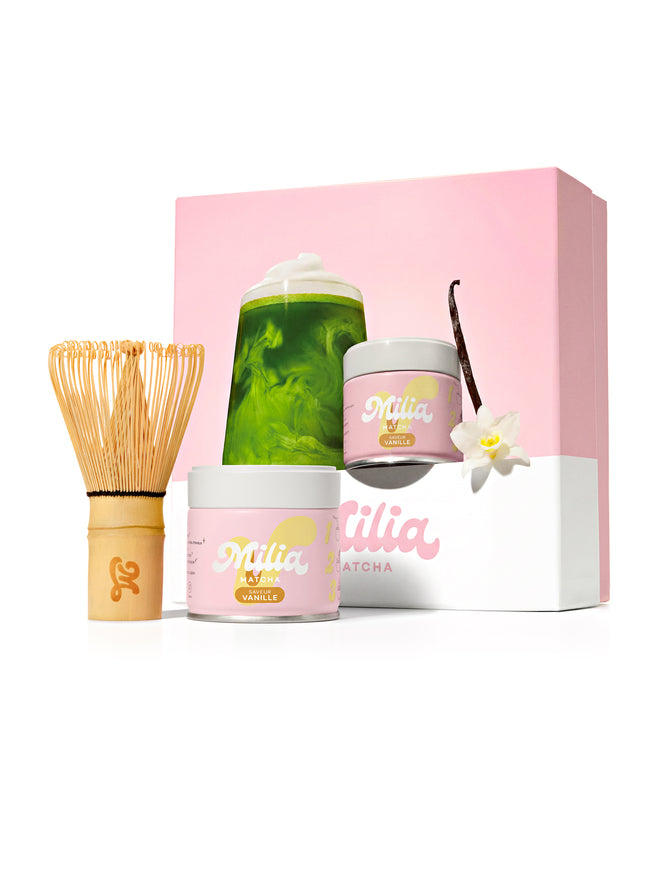
THE ESSENTIALS
Vanilla
Ceremonial Matcha
Ceremonial
100G

THE ESSENTIALS
Ceremonial
Ceremonial Matcha
Strawberry
30G


